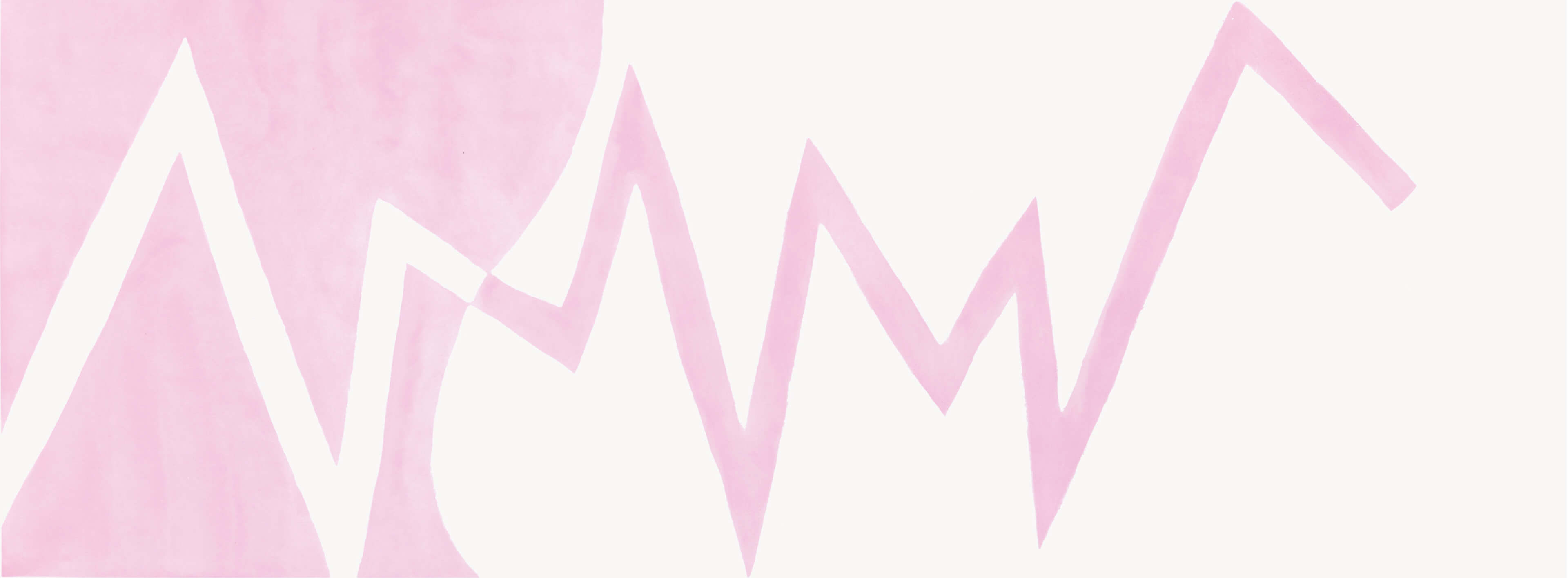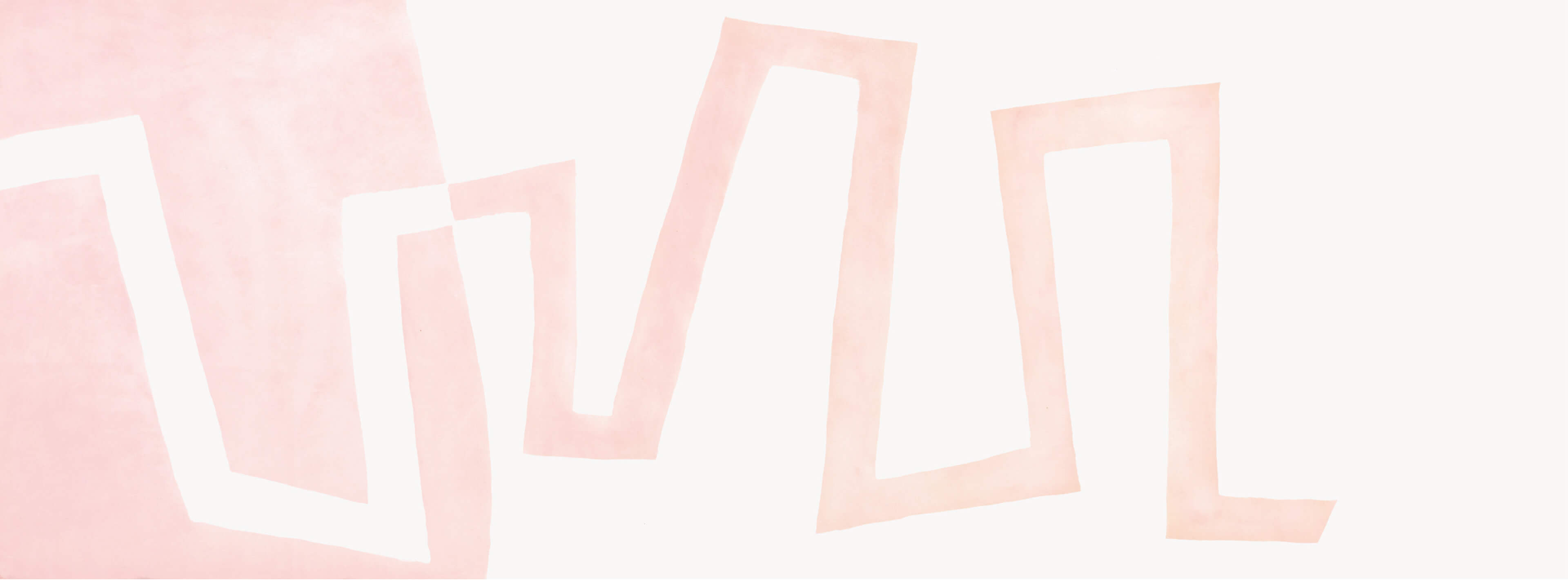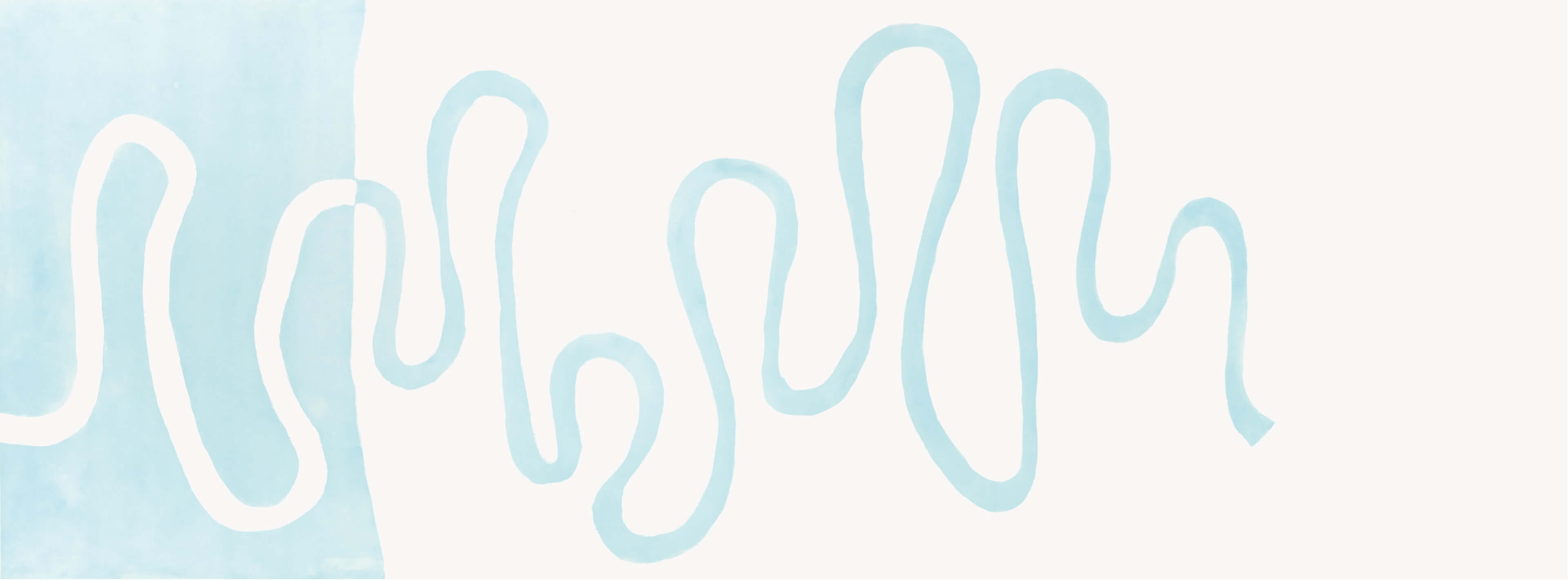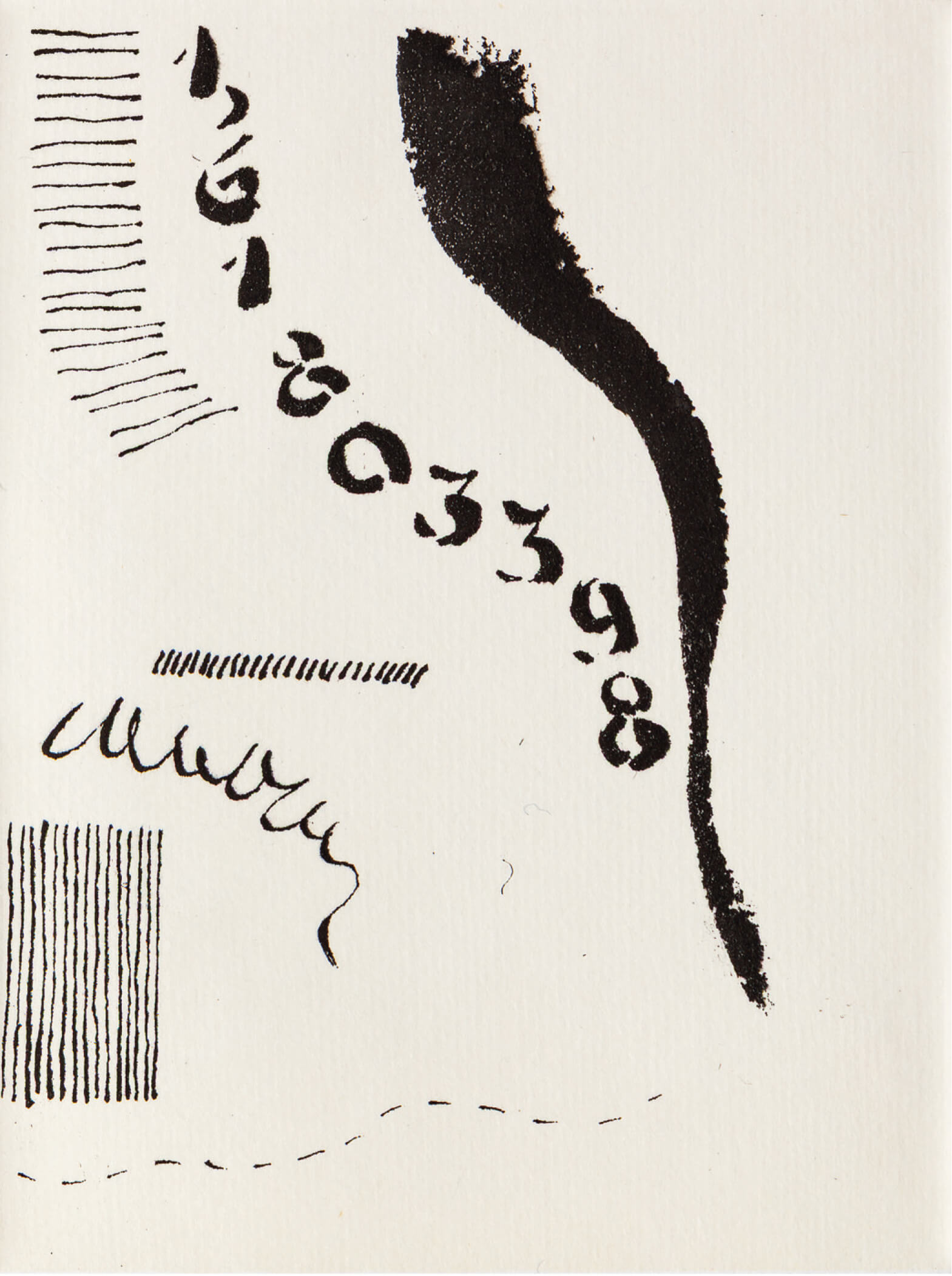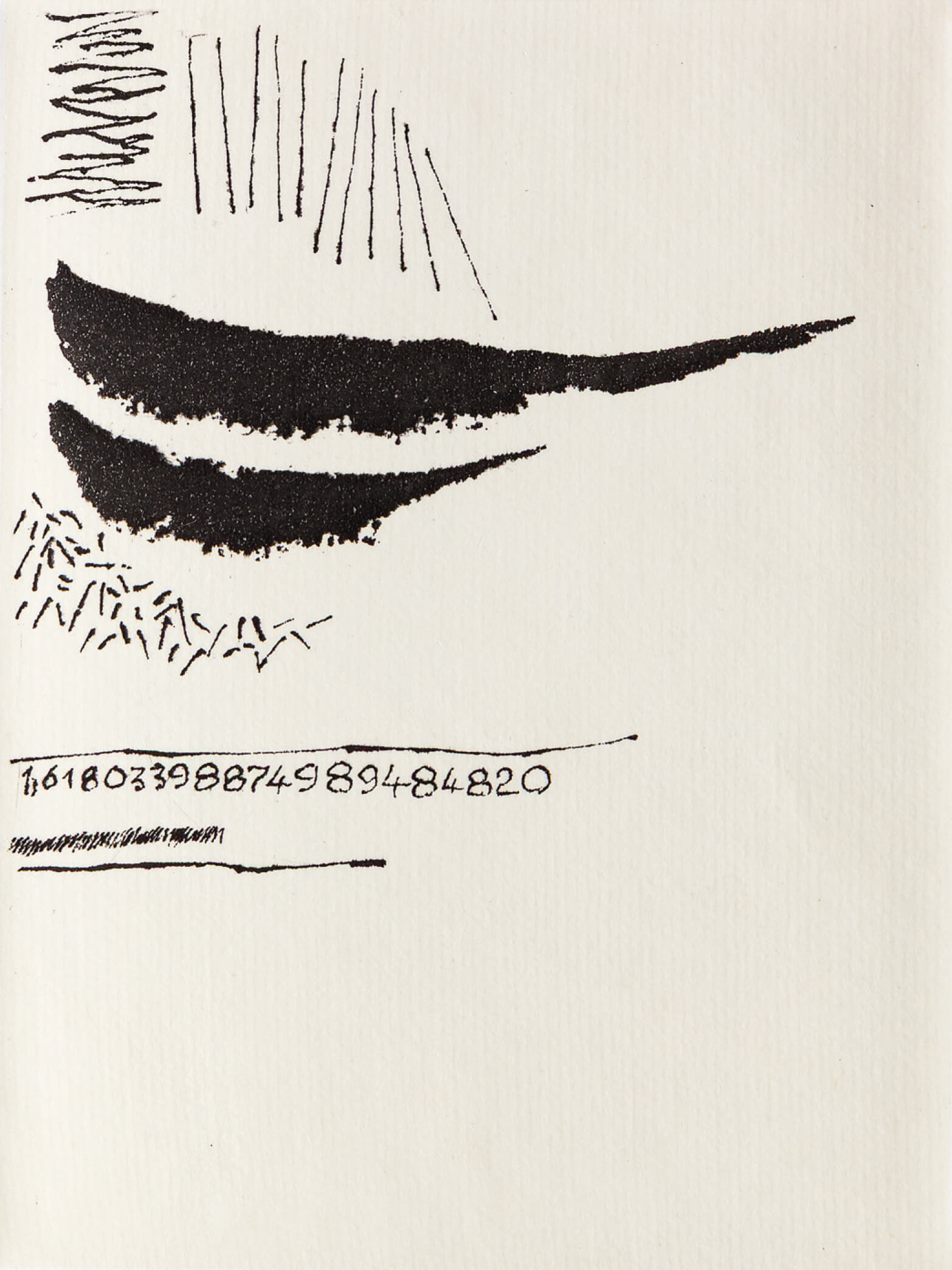

Giorgio Griffa, Arrotondato, 2025, 95 x 220 cm (plate 75 x 200 cm), aquatint print—detail
Giorgio Griffa, Arrotondato, 2025, 95 x 220 cm (plate 75 x 200 cm), aquatint print—detail
This exhibition presents a series of aquatint prints by Giorgio Griffa at the Stamperia d’arte Albicocco in Udine, crowning the time they have shared together. Not just a collaborative project between an artist and printshop, but an intimate relationship built on creative sensibilities, shaped by comings and goings, gestures repeated, and print trials.
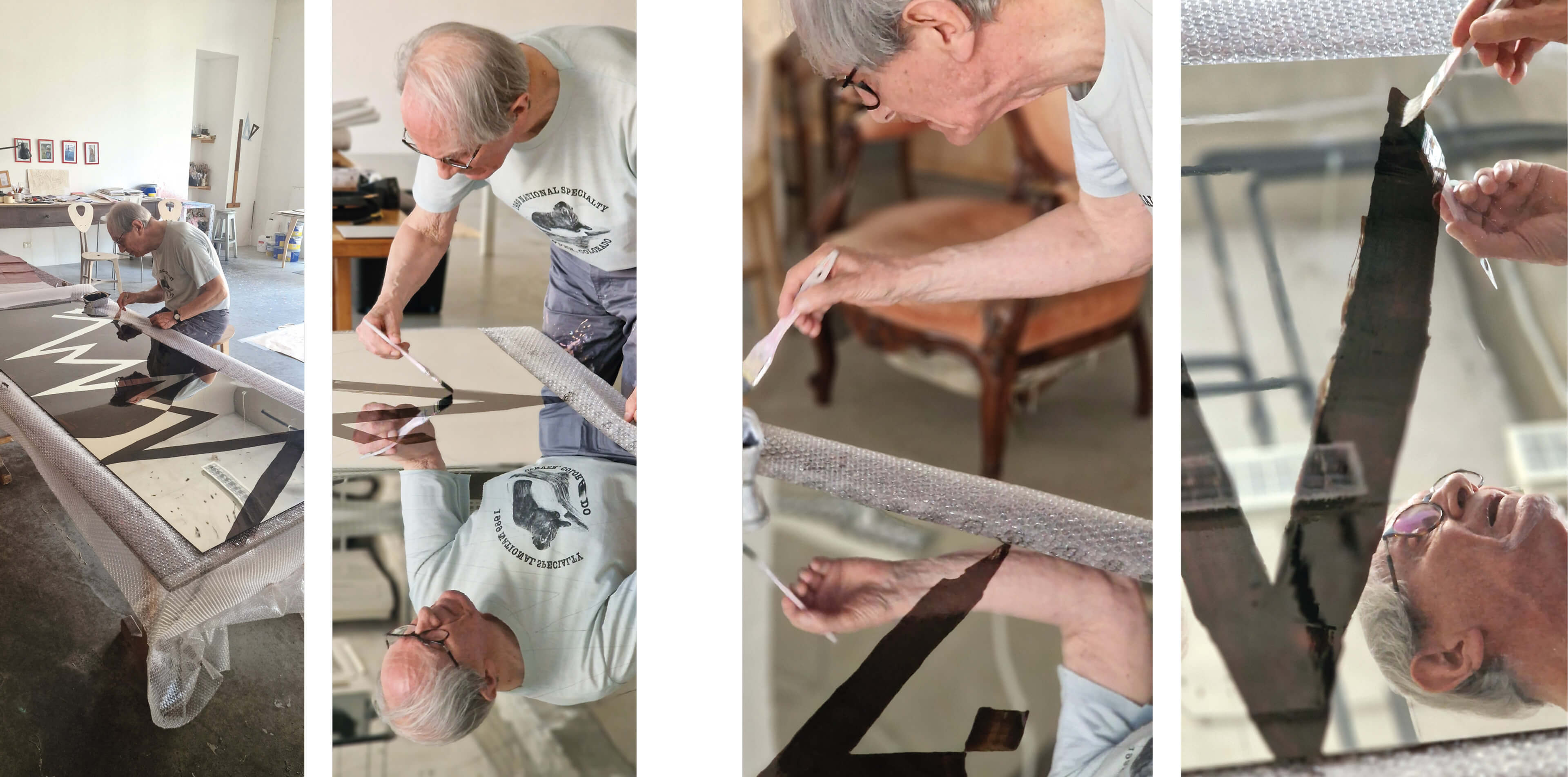
An encounter that brought the printers into Giorgio Griffa’s studio in Turin and the artist into the printshop in Udine, with its times and methods. The result was a series of large plates etched by Griffa himself. They do not simply transpose or reproduce existing works on paper, but present something new, shaped by the encounter with the plate, a surface that does not yield readily to the artist’s hand but resists it, requiring the gesture to adapt to it and the mark to find new ways to transpire.
With the expert guidance of the master printers Corrado and Gianluca Albicocco, who oversaw the entire process, Griffa was able to approach etching as a continuation of his painting, letting the medium speak for itself. Its response was amazing, indirectly conveying all the depth and complexity of the veils of color typical of Griffa’s painting. Light plays with the surface and is reflected and modulated on paper, which itself plays an active part, like a wall in fresco painting, lending the prints a unique vitality and effervescence.
Alongside the practical sensibilities shared with Griffa, expressed in adjustments to details and technical decisions, there was the making and handling of unconventionally large plates, the biggest measuring 75x200cm. A feat that underscores all the exceptional technical bravura of the Albicocco printers in working on a complex operational scale, rarely found in chalcography.
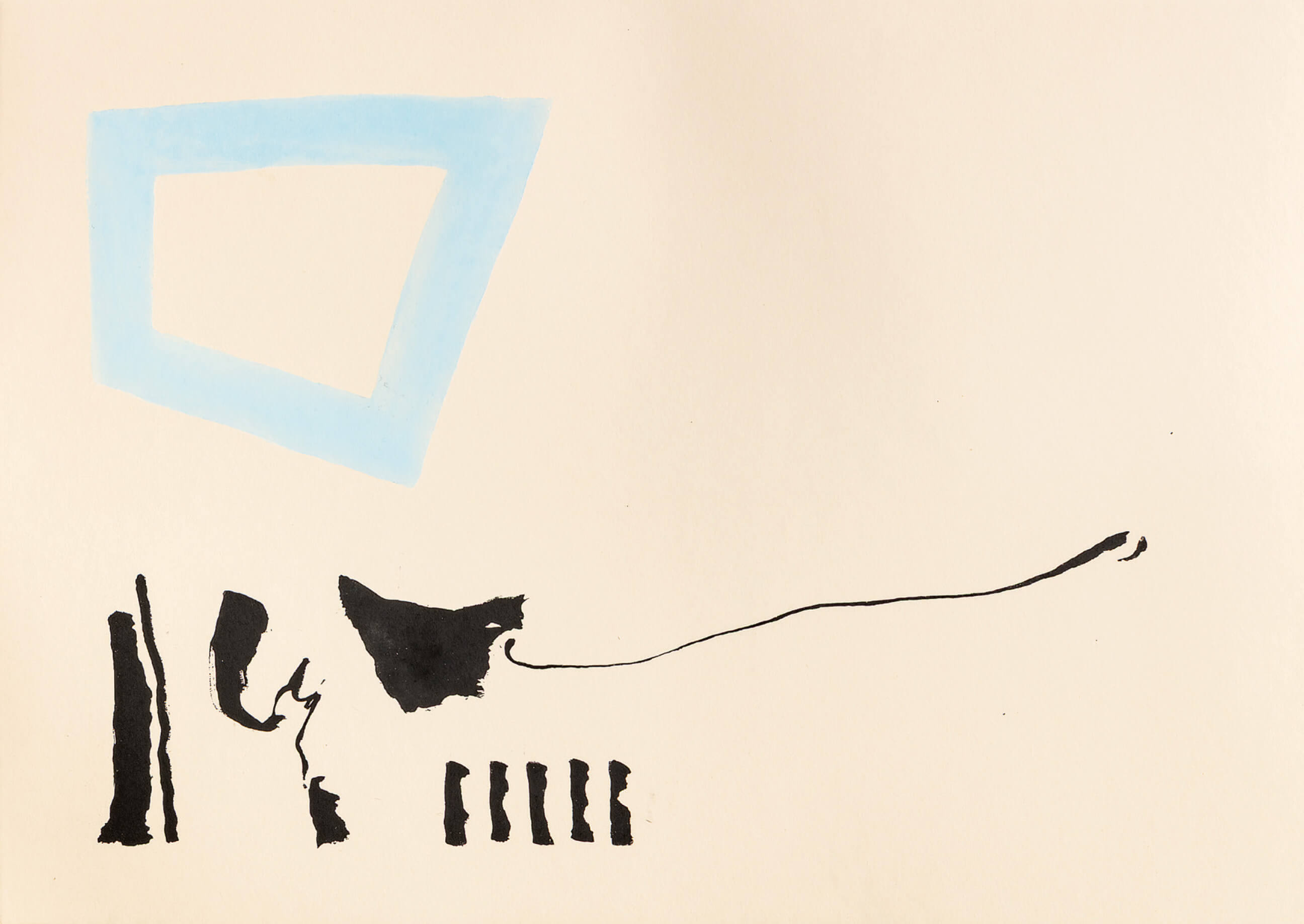
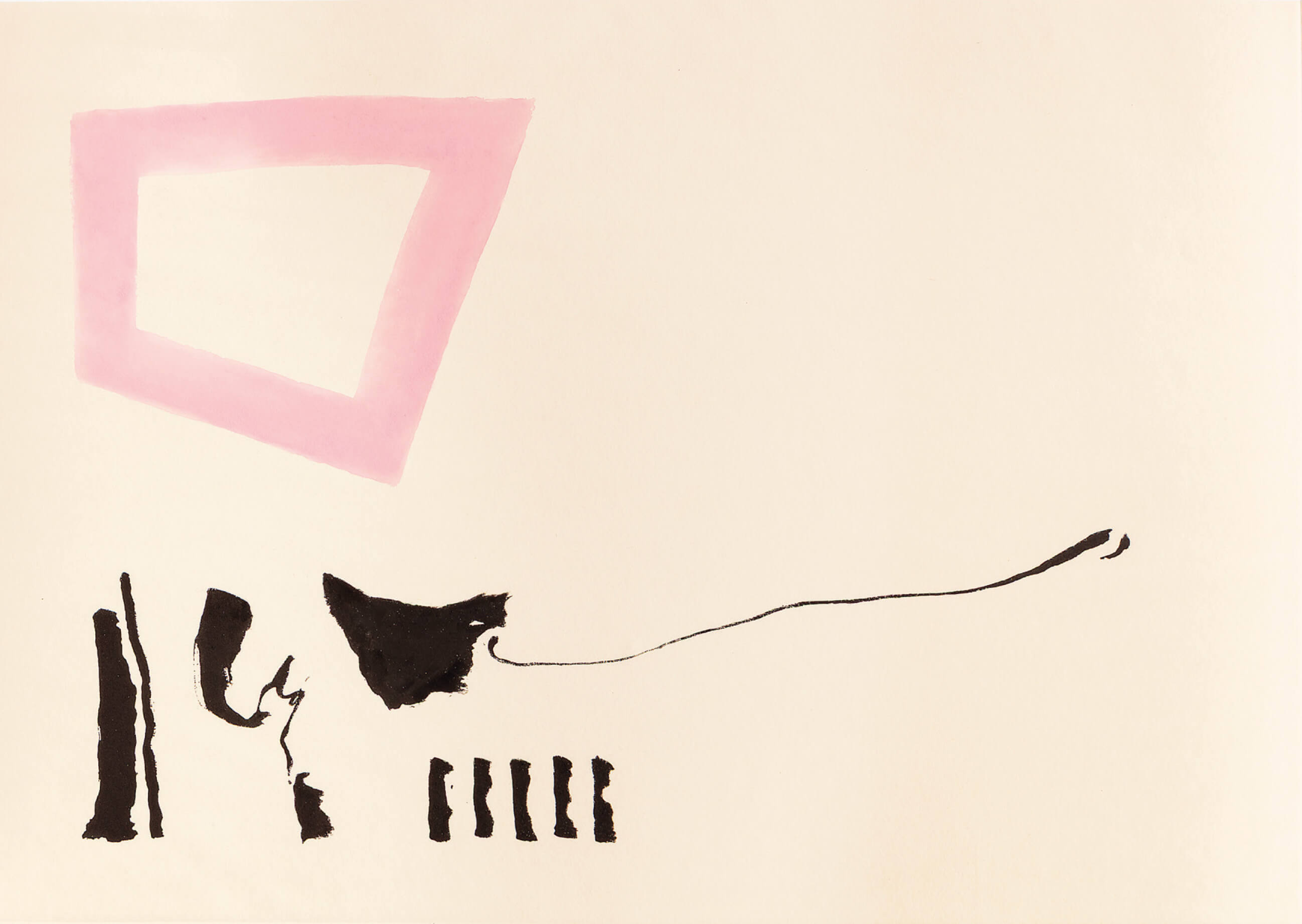
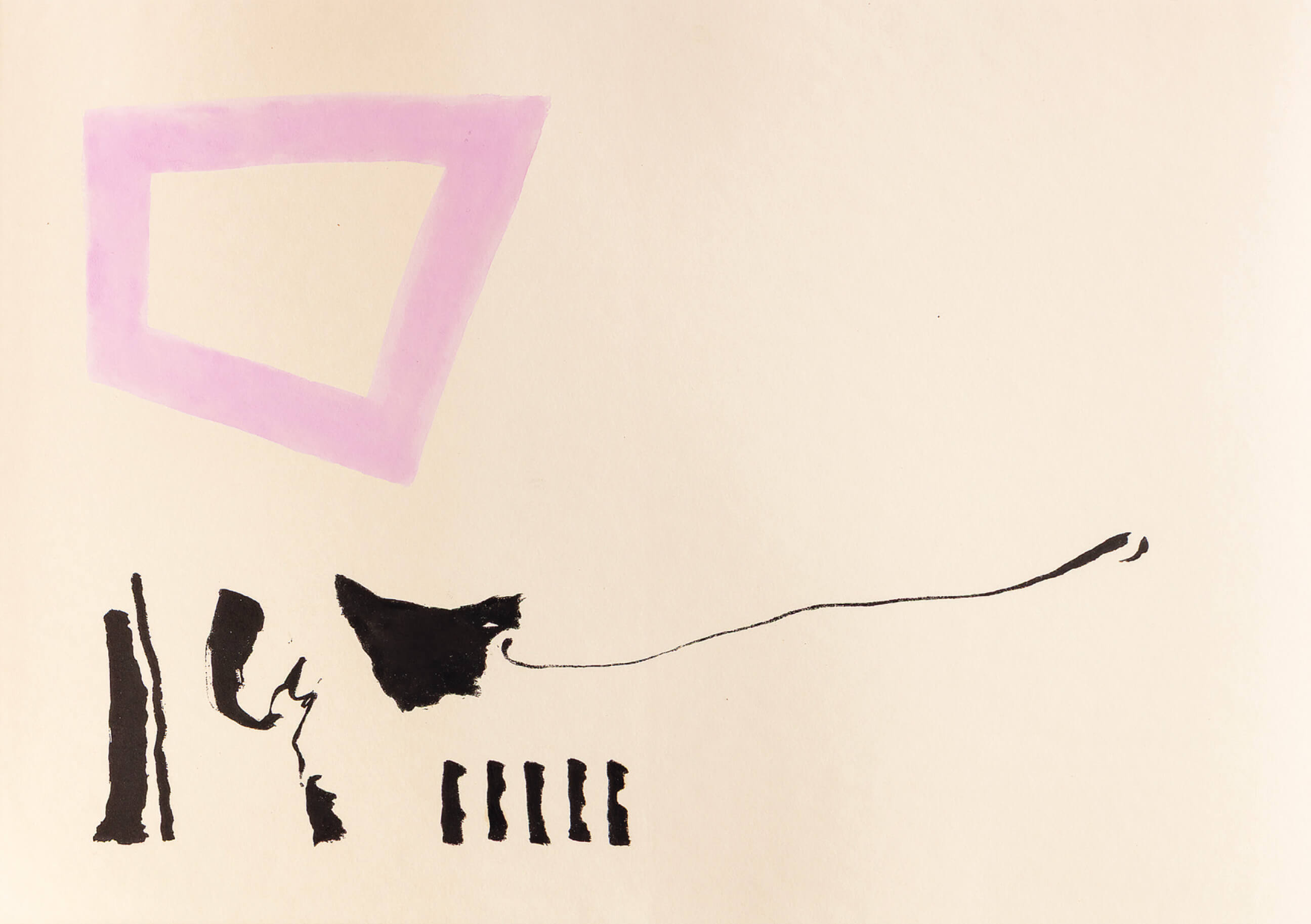
The exhibition features three prints from Griffa’s 2025 aquatints—Arrotondato, Angolo Acuto, and Angolo Retto—and another three prints from his recent 2026 work—Forte Debole Azzurro, Forte Debole Rosa, and Forte Debole Viola, plus two prints made in 2025 from his Golden Ratio cycle—Canone Aureo 938 and Canone Aureo 820. This last work has been chosen by the GG Foundation for the Welcome Kit reserved to Patrons under the new Membership Program.
Thanks to another fortunate encounter in Griffa’s studio, the exhibition is curated by Luca Pietro Nicoletti. His insightful words accompany the works on show and enrich the catalogue published by the Stamperia Albicocco, in partnership with Magonza.
(gc)
Spaces of Silence and Flashes of Color. Griffa’s Painting Meets Chalcography.
“I use marks to encircle color,” said Giorgio Griffa when we first met in his bright big studio. […] Those first words, shaping the conversation with measured gestures, in keeping with the artist’s cadenced voice and intimate urban temperament, took their cue from Henri Matisse, one of the painters he loves most and whom he cites repeatedly in his writings as a reference and term of comparison in talking about his poetics. When Griffa speaks about painting, his voice comes alive with great vivacity, swelling with an internal passion that cannot simply be said to “serve” his work, but shows a radical existential imperative, which through the patient practice of his painting has led him to grasp something more about life and the present. […]
In chalcography, there is no room for reasoning about how the medium absorbs color. Ink does not penetrate paper the way diluted acrylic paint bleeds into the fibers of a canvas. Thus, it was up to the skill of the printer to capture something of that transparency when inking and then wiping clean the plates. Griffa’s task, instead, was to maintain the fluidity of his hand gesture using a medium he was not accustomed to, which could not glide with the same ease as when applying diluted paint to paper or canvas. [...]
Yet, in the technique developed by Griffa in over sixty years of painting, there was a chalcographic potential waiting to be expressed. […] What most certainly remained intact, finding new life even, was his desire to “introduce spaces of silence,” with the effect that could have on the perception of the work and its finiteness in not being finite. “The work,” he told me, “is finished when I stop, when a piece of silence remains.”
In short, it all hangs in a state of suspension and rarefaction, as visual as it is temporal.
Luca Pietro Nicoletti